
Introduction
Women in leadership are not a modern concept. Throughout history, women have held positions of power, challenging social norms and demonstrating that effective leadership depends on competence, vision, and management skills rather than gender. Today, women continue to influence diverse sectors with innovative thinking, transformative approaches, and effective listening.
Leadership reflects organizational effectiveness and efficiency and fosters collaboration and humanitarian engagement. Despite growing recognition of diversity and inclusion, women still face discrimination and unequal opportunities across industries. Social norms often portray women as primarily responsible for domestic and reproductive roles, contributing to their underrepresentation in leadership.
Research shows that women leaders positively impact communities, improve social outcomes, and strengthen humanitarian responses. However, gender bias remains a significant barrier, and women are frequently overlooked despite equal competence. Progress is slow but measurable: women’s representation in senior management rose from 25.7% in 2015 to 28.1% in 2024, and in middle management from 31.5% to 33.4% (McKinsey & Co, Women in the Workplace).
The current challenge is not only increasing representation but also redefining leadership norms to reflect diversity and inclusion, supported by inspiring female role models and global frameworks such as the UN Beijing Platform for Action.
Keywords: Leadership, Gender Inequality, Leadership Dynamics, Diversity, Empowerment
Leadership and Women Empowerment
Effective leaders are expected to be flexible and able to respond to uncertain or ambiguous situations. Leadership at all organizational levels requires commitment to quality, excellence, empowerment, and continuous learning. In the public sector, leadership often alternates between transactional practices—based on rewards, penalties, and performance—and transformational practices, which emphasize inspiration, motivation, and positive change. Transformational leadership has gained attention due to its focus on growth, influence, and long-term development.
Women’s leadership has evolved alongside broader social movements advocating for gender equality and women’s rights. While literature often compares male and female leadership styles, many social scientists note that differences are usually minor or overstated. Leadership styles associated with gender may reflect variations in task orientation, goal achievement, and relationship-building. Integrating women into the workforce has enhanced traditional work environments by promoting inclusive and empowering approaches.
Traits often associated with women—such as empathy, humility, and community-mindedness—are valuable for addressing modern organizational and societal challenges. However, advantages attributed to women in leadership are context-dependent, with outcomes influenced more by individual personality and situational factors than by gender alone. While women have sometimes led gender-specific policy initiatives, such cases remain exceptional rather than global trends.
Social Empowerment
Social empowerment refers to granting women equal status and opportunities to develop themselves freely. Many women continue to navigate patriarchal social structures that limit their choices and mobility. Family obligations and societal expectations often constrain their independence.
In Arab and Middle Eastern societies, cultural norms heavily define gender roles, and leadership has historically been male-dominated. Marriage often presents a significant arena for negotiating gender responsibilities, where power dynamics are strongly felt. Family expectations and fear of societal judgment can further restrict women’s autonomy. Despite progress, transforming gender relations within families and communities remains slow.
Educational Empowerment
Education is one of the most critical dimensions of women’s empowerment. It helps reshape gender identity by challenging stereotypes and promoting more positive and equitable views of women’s roles. Education provides women with the knowledge, skills, and awareness needed to understand their rights, recognize inequality, and advocate for themselves.
It also increases their ability to make informed decisions and participate more confidently in family and society. While girls were once kept out of school under the belief that their primary role was in the home, education has become a fundamental tool for building aspirations and expanding opportunities for women.
Employment and Economic Empowerment
Employment and economic participation are among the strongest drivers of empowerment. Earning an income provides women with autonomy, decision-making power, and control over their lives. Economic engagement enhances independence and strengthens confidence.
Although attitudes in many Middle Eastern societies have become more accepting of women in leadership, the “glass ceiling” persists, limiting career progression due to gender bias despite qualifications.
Industry Comparisons
Finance
Diverse leadership teams in finance enhance performance, generate innovative ideas, and expand market share. Women remain underrepresented in senior financial roles, highlighting the need for training, exposure, and opportunities. Organizations that embrace gender-diverse teams achieve stronger outcomes through innovation, agility, and strategic thinking.
Marketing
Women are well represented in marketing, often excelling due to strong interpersonal and communication skills. However, women of color remain underrepresented in senior roles. Structured development programs and supportive practices can maximize women’s contributions and unlock untapped potential.
Information Technology (IT)
Women are underrepresented in IT, facing challenges including pay inequality, limited advancement, and workplace barriers. Flexible policies, inclusion strategies, and supportive environments are essential to retain and advance women in technology roles.
Education
Women are prevalent in education, particularly at lower levels, but remain underrepresented in leadership within higher education. Increasing female representation in decision-making roles is critical for driving meaningful reforms and maximizing the sector’s potential.
Women Leaders in Executive Roles
Closing the gender gap in executive leadership is not only a matter of fairness but also crucial for fostering a more innovative and effective workforce. Studies consistently highlight that women leaders contribute unique strengths, such as creativity, empathy, and strong collaboration skills. These qualities are essential for making bold decisions and generating innovative solutions in today’s complex business landscape. This emphasizes the importance of diverse leadership capable of steering organizations through fast-paced and dynamic change.
The Impact of Gender Diversity in Leadership on Financial Performance
Studies by The Conference Board indicate a strong link between gender diversity in leadership and a company’s financial success. Organizations where women hold at least 30% of leadership roles are 12 times more likely to be among the top 20% in financial performance. This highlights the substantial value that diverse leadership brings to organizational outcomes.
Moreover, companies led by women tend to attract more investor interest, as research suggests that diverse leadership teams often achieve higher financial returns. For instance, an MSCI report revealed that firms with robust female leadership achieved an annual return on equity of 10.1%, compared to 7.4% for companies without significant female representation in leadership.
The Confidence and Leadership Gap for Women
Women often face barriers to reaching top leadership positions, and lack of confidence is frequently cited, though the issue is more complex. Unconscious bias plays a significant role in limiting their opportunities, as women are judged differently than men—men are often evaluated based on their potential, while women are assessed on their past performance. In the IT industry, for example, women have been more frequently criticized for their personality traits during performance reviews.
Additionally, women may not receive the coaching needed to navigate company culture and understand the business, and they often struggle to find sponsors—senior leaders who can advocate for their advancement—because men in senior positions may find it harder to mentor women in the same way they mentor men. Without a sponsor, leadership opportunities can be limited. Women’s confidence is sometimes misinterpreted through their interpersonal style or cautious approach to risk, yet in reality, they are self-assured, aware of their abilities, and see little value in overpromoting themselves.
Continued erosion of women in leadership
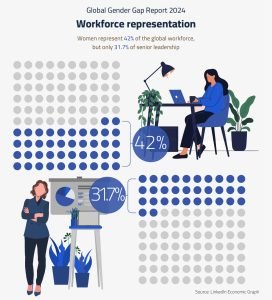
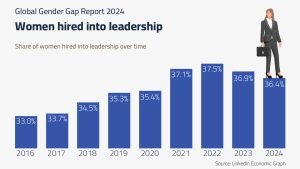
In 2022, the global hiring rate for women into leadership roles topped 38%. It has fallen each year since and is now down to 36%.
It’s a slow but steady downward trend that we’re seeing globally, including in major economies. This decline should set off alarm bells across sectors and countries; female representation at the leadership level has risen by less than 1% in six years (30.9% to 31.7%).
Gender Differences in Leadership Styles and Effectiveness
Studies show that women tend to adopt cooperative, supportive, and democratic leadership styles, while men are more likely to use directive, competitive, or autocratic approaches. Women generally communicate in a more open, polite, and socially engaging manner, whereas men tend to be self-confident, assertive, and dominant.
Women often engage closely with their teams, pay attention to details, and maintain effective interaction. In contrast, men commonly work independently, emphasizing authority and control. These differences are shaped largely by societal expectations and upbringing rather than biology, and behaviours tend to converge when men and women occupy similar positions.
Effectiveness depends on tasks, organizational context, and learning from each other’s strengths, highlighting that there is no single “best” leadership style.
Psychologists also point out that childhood socialization plays a major role, as boys and girls are often raised differently, leading to distinct skills and leadership tendencies later in life—even when they occupy similar roles.
The following table summarizes the key differences between women’s and men’s leadership styles.
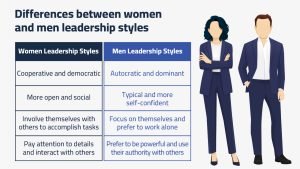
Table1: Differences between women and men leadership styles
| Women Leadership Styles | Men Leadership Styles |
| Cooperative and democratic | Autocratic and dominant |
| More open and social | Typical and more self-confident |
| Involve themselves with others to accomplish tasks | Focus on themselves and prefer to work alone |
| Pay attention to details and interact with others | Prefer to be powerful and use their authority with others |
Barriers to Women’s Leadership
Women face persistent challenges in attaining leadership positions, with gender bias being one of the most significant obstacles. Despite qualifications and competencies, women are often overlooked in favor of male counterparts. Progress exists but remains slow across political, corporate, and educational sectors.
Key Reports:
- World Economic Forum – Global Gender Gap Report (2023–2025): Investment in gender equality remains limited across 148 countries, creating a “hidden tax” on global growth and weakening economic resilience.
- McKinsey & Co., Women in the Workplace: Proportion of women in senior positions rose from 25.7% (2015) to 28.1% (2024), and in middle management from 31.5% to 33.4%. Despite these gains, women perceive limited improvement in workplace environments.
- United Nations – Beijing Platform for Action (30th anniversary report): Levels of discrimination against women are rising; legal protections are weakening globally.
1. The Glass Ceiling
- Invisible barriers prevent women from advancing to top leadership roles.
- Causes include occupational segregation: women are concentrated in areas such as HR, PR, or certain finance functions, rarely leading to top-management positions.
- Women often have to exceed performance expectations compared to men.
- Patriarchal organizational values maintain the gender gap despite claims of meritocracy.
2. The Old-Boy Network
- Male-dominated networks favor individuals who share similar backgrounds and education.
- Women are frequently excluded from promotions because they are outside these networks.
- This contributes to faster career progression, higher-status positions, and greater compensation for men.
3. Exclusion from Informal Social Gatherings
- Networking events (e.g., golf, male-only gatherings) are critical for corporate advancement.
- Women excluded from these networks miss opportunities to build rapport with colleagues, clients, and decision-makers.
- Even when women participate, some clubs/events are not female-friendly, limiting access to key informal networks.
- Exclusion from these spaces reinforces women’s status as “outsiders” and undermines leadership progression.
Strategies for Advancing Women in Leadership
To promote gender equity in leadership, organizations and individuals should implement targeted strategies that dismantle barriers and empower women.
- Mentorship and Sponsorship Programs
- Connect emerging female leaders with experienced mentors for guidance and development.
- Sponsorship ensures women have advocates who actively promote their advancement, recommending them for leadership roles and high-impact projects.
- Leadership Training and Professional Development
- Provide tailored programs on confidence-building, negotiation, influence, and executive decision-making.
- Leadership coaching equips women with skills to navigate challenges and succeed in senior roles.
- Inclusive Workplace Policies
- Implement policies supporting gender equality and work-life balance: equal pay, paid parental leave, flexible working arrangements.
- Transparent promotion criteria ensure opportunities are awarded based on merit, enhancing retention and growth.
- Supportive Allies and Employee Networks
- Male colleagues and senior leaders can advocate for inclusive policies, challenge biases, and foster supportive cultures.
- Employee Resource Groups (ERGs) provide networking, discussion spaces, and platforms to amplify women’s contributions.
By implementing these strategies, organizations create an environment where women are empowered, supported, and positioned to thrive in leadership roles, ultimately benefiting both employees and business performance.
Success stories driving change
Many female leaders have proven that women are more than capable of leading industries to new heights. For example:
HE Dr Maryam Al Suwaidi
CEO, UAE Securities and Commodities Authority (SCA)
HE Dr Maryam Al Suwaidi has been the CEO at the Securities & Commodities Authority since 2021, the first woman in the GCC to head their capital markets authority.
She has been working at the Securities & Commodities Authority (SCA) since 2002, two years after it was founded to regulate the UAE’s two exchanges: the Abu Dhabi Securities Exchange (ADX) and the Dubai Financial Market (DFM); the Dubai Gold and Commodity Exchange has also been regulated by the SCA since it was established in 2005.
At the SCA, Dr Al Suwaidi has been Team Leader of the SCA International Competitiveness, which accomplished the number one rank in corporate board effectiveness in the board of directors effectiveness indicator at the World Competitiveness Yearbook issued by the International Institute for Management Development, and the number one rank in MENA region in the Investor Protection Indicator in the World Bank Ease of Business Report. She was also Deputy Chairman of the Technical Committee at the SCA, chairing the committee from 2012 to 2015, and Team Leader of the UAE Oversight and Supervision on Financial Markets of the Cooperation Council for the Arab States of the Gulf.
Dr Al Suwaidi holds a PhD in law from the UK’s University of Leeds as well as a master’s degree in commercial law from the University of Wales. She holds a licence (Shariah and Law) ‘honour’, and is a registered lawyer (non-practicing) at the UAE Ministry of Justice, as well as being and a graduate of the UAE Government Leaders Programme – Executive Leaders organised by the Prime Minister Office/ the Federal Authority For Government Human Resources (FAHR) 2010-2011.
H.E. Dr. Rania A. Al-Mashat
Over 20 years in central banking, monetary policy, international cooperation, sustainable development, and climate finance, with extensive international experience across the Middle East, Africa, and Asia.
- Current & Previous Roles:
- Minister of Planning, Economic Development & International Cooperation, Egypt (2018–present)
- Minister of International Cooperation (2019–2024)
- Egypt’s first female Minister of Tourism (2018–2019)
- Advisor and Senior Economist at the International Monetary Fund (IMF)
- Deputy Governor for Monetary Policy, Central Bank of Egypt (2005–2016)
- Key Achievements:
- Developed Egypt’s Water-Food-Energy Nexus (NWFE) platform to mobilize climate finance and accelerate green transition.
- Modernized the Central Bank of Egypt’s monetary policy, including adoption of inflation targeting.
- Managed Egypt’s partnerships with bilateral and multilateral development institutions to align development finance with national priorities.
- International Roles & Memberships:
- Represents Egypt in the World Bank, African Development Bank, Islamic Development Bank, EBRD, and other international financial institutions.
- Member of global councils and alliances, including WEF initiatives, UNICEF GenU, GEAPP, and climate finance networks.
- Member of research and academic boards including Bruegel, AUC, and Economic Research Forum.
Daila Ibrahim
Selected by Forbes as one of the 100 Most Powerful Businesswomen in the Middle East (2024).
Chairperson of Nahdet Misr Publishing House, under her leadership the group has secured over 64 local and international awards in publishing and education.
Founder of Nahdet Misr for Entrepreneurship (Ed Ventures) in 2017, the first venture capital firm in the region dedicated to supporting and investing in startups in educational technology and cultural sectors.
Founder of Taqheel for Excellence Skills Development (2021), providing comprehensive solutions in technical education and vocational training.
Co-founder of multiple companies including Nahdet Misr Digital Solutions (1998), Nahdet Misr Advertising (1998), Nahdet Misr Press and Media (2004), and Nahdet Misr Trade and Distribution (2009).
Amal Bahwan
Chairperson of the Board of Directors of the National Bank of Oman since May 17, 2020, Sultanate of Oman.
She also serves as Chairperson of the Board of Directors of Al Jazeera Steel Products Company, Al Afia Development and Health Investment Company, and as Vice Chairperson of the Board of Directors of Suheil Bahwan Group Holding.
She is also a board member of Oman Oil Marketing Company, National Pharmaceutical Industries Company, and a member of the Board of Trustees of Silatech Foundation.
She previously served as Managing Director of Rawaj DHL and Chairperson of the Board of Directors of Oman Ceramics Company.
Her name has been listed in numerous rankings by Forbes Middle East, including The Middle East’s 100 Most Powerful Businesswomen 2023, The Middle East’s Most Influential Women 2018, and The World’s 100 Most Powerful Arab Women 2017.
Conclusion
In conclusion, women’s leadership is a vital component of organizational success, societal development, and global progress. Despite historical and ongoing challenges, including gender bias, the glass ceiling, and exclusion from informal networks, women continue to demonstrate remarkable capabilities in leadership roles across industries. Empowering women through mentorship, inclusive policies, professional development, and social support not only enhances gender equality but also drives innovation, performance, and resilience within organizations. As more women assume leadership positions, redefining traditional leadership norms and amplifying female role models will be essential to creating inclusive, dynamic, and effective workplaces worldwide.
- References:
- Alshami, G. H. A. A. (2025). Women in leadership roles. World Journal of Advanced Research and Reviews, 26(1), 2105–2111.
- Novialumi, A., Widiawati, K., & Maisaroh, E. (2025, November 4). The impact of women leadership and decision-making on employee performance with servant leadership style as a moderating variable. International Journal of Business, Law, and Education (IJBLE).
- Jackson, T. L. (2020, June). The art of strategic womanhood©: Emotional intelligence in decision-making among women leaders in transformational women’s leadership development© (Doctoral project, Bakke Graduate University, Dallas, Texas).
- Ugwu, J. N., Mulegi, T., Mbabazi, A., & Eze, C. E. (2023). Barriers to women leadership. IDOSR Journal of Arts and Humanities, 9(1), 6–10. https://www.idosr.org
- Oxfam GB. (2000). Women and leadership: Oxfam focus on gender. Oxford, UK: Oxfam GB. (Digital edition, 2010). ISBN 085598452X
- HIGH5 Content & Review Team. (2025, October 23). 20+ women in leadership statistics & data for 2024/2025. https://high5test.com/women-in-leadership-statistics/
- World Economic Forum. (2024, June). Global gender gap 2024: Insight report.
- INTOO Staff Writer. (n.d.). The importance of women in leadership. https://www.intoo.com/us/blog/the-importance-of-women-in-leadership
- Duchene, K. (2025, January 22). The transformative power of women in leadership roles. Redefining Consulting. https://www.forbes.com/sites/kateduchene/2025/01/22/the-transformative-power-of-women-in-leadership-roles/
No comment